After being interviewed by the school administration, the eager teaching prospect said: "Let me see if I've got this right... You want me to go into that room with all those kids, and fill their every waking moment with a love for learning, and I'm supposed to instill a sense of pride in their ethnicity, modify their disruptive behavior, observe them for signs of abuse and even censor their T-shirt messages and dress habits.
You want me to wage a war on drugs and sexually transmitted diseases, check their backpacks for weapons of mass destruction, and raise their self esteem.
You want me to teach them patriotism, good citizenship, sportsmanship, fair play, how to register to vote, how to balance a checkbook, and how to apply for a job.
I am to check their heads for lice, maintain a safe environment, recognize signs of anti-social behavior, make sure all students pass the state exams, even those who don't come to school regularly or complete any of their assignments.
Plus, I am to make sure that all of the students with handicaps get an equal education regardless of the extent of their mental or physical handicap.
I am to communicate regularly with the parents by letter, telephone, newsletter and report card. All of this I am to do with just a piece of chalk, a computer, a few books, a bulletin board, a big smile AND on a starting salary that qualifies my family for food stamps!
You want me to do all of this and yet you expect me…
NOT TO PRAY ????"

Il faut en tout dialogue et discours qu'on puisse dire à ceux qui s'en offensent : de quoi vous plaignez-vous ?
11 May 2006
10 May 2006
Month Stones and Flowers
The following information is provided to satisfy a request. The stones and their attributed meanings in brackets come first, followed by the flowers and also their meanings.
January: garnet (constancy); carnation, snowdrop (fascination, devoted love / consolation, a friend in adversity)
February: amethyst (sincerity); violet, primrose (modesty, faithfulness, virtue / young love)
March: aquamarine, bloodstone (courage); daffodil, jonquil (regard, devotion / affection returned, sympathy)
April:diamond, white sapphire (innocence); daisy, sweet pea (innocence, youth, purity / goodbye, blissful pleasure, departure)
May: emerald (love, success); lily of the valley, hawthorn (sweetness, humility, return of happiness / fertility, hope)
June: pearl, moonstone, alexandrite (health and longevity); rose, honeysuckle (love / devoted affection)
July: ruby (contentment); larkspur, water lily (laughter / purity of heart)
August: peridot, sardonyx (married happiness); gladiolas, poppy (strength of character, sincerity, generosity, natural grace / eternal sleep, imagination, oblivion)
September: sapphire (clear thinking); aster, morning glory (symbol of love, daintiness / talisman of love, affection)
October: opal, tourmaline, pink sapphire (hope); calendula, cosmos (joy / modesty)
November: topaz, citrine (fidelity); chrysanthemum (cheerfulness, you're a wonderful friend, rest, loveliness, abundance, wealth)
December: turquoise, zircon (prosperity); narcissus, holly (stay as sweet as you are, egotism, formality / foresight, good wishes)
January: garnet (constancy); carnation, snowdrop (fascination, devoted love / consolation, a friend in adversity)
February: amethyst (sincerity); violet, primrose (modesty, faithfulness, virtue / young love)
March: aquamarine, bloodstone (courage); daffodil, jonquil (regard, devotion / affection returned, sympathy)
April:diamond, white sapphire (innocence); daisy, sweet pea (innocence, youth, purity / goodbye, blissful pleasure, departure)
May: emerald (love, success); lily of the valley, hawthorn (sweetness, humility, return of happiness / fertility, hope)
June: pearl, moonstone, alexandrite (health and longevity); rose, honeysuckle (love / devoted affection)
July: ruby (contentment); larkspur, water lily (laughter / purity of heart)
August: peridot, sardonyx (married happiness); gladiolas, poppy (strength of character, sincerity, generosity, natural grace / eternal sleep, imagination, oblivion)
September: sapphire (clear thinking); aster, morning glory (symbol of love, daintiness / talisman of love, affection)
October: opal, tourmaline, pink sapphire (hope); calendula, cosmos (joy / modesty)
November: topaz, citrine (fidelity); chrysanthemum (cheerfulness, you're a wonderful friend, rest, loveliness, abundance, wealth)
December: turquoise, zircon (prosperity); narcissus, holly (stay as sweet as you are, egotism, formality / foresight, good wishes)
To All English Speakers
THE FUTURE?
The European Commission has just announced an agreement whereby English will be the official language of the EU rather than German, which was the other possibility. As part of the negotiations, Her Majesty's Government conceded that English spelling had some room for improvement and has accepted a 5 year phase in plan that would be known as 'EuroEnglish'.
In the first year, 's' will replace the soft 'c'. Sertainly,this will make the sivil servants jump with joy. The hard 'c' will be dropped in favour of the 'k'. This should klear up konfusion and keyboards kan have 1 less letter. There will be growing publik enthusiasm in the sekond year, when the troublesome 'ph' will be replaced with the 'f'. This will make words like 'fotograf' 20% shorter.
In the 3rd year, publik akseptanse of the new spelling kan be expekted to reach the stage where more komplikated changes are possible. Governments will enkourage the removal of double letters, which have always ben a horor to akurate speling. Also, al wil agre that the mes of the silent 'e'-s in the language is disgraseful, and they should go away.
By the 4th yar, peopl will be reseptiv to steps such as replasing the 'th' with 'z' and 'w' with 'v'. During ze fifz yar, ze unesesary 'o' kan be dropd from vords kontaining 'ou' and similar changes vud of kors be aplid to ozer kombinations of leters. After zis fifz yar, ve vil hav a sensibl riten styl. Zer vil be no mor trubls or difikultis and evrivun vil find it ezi tu understand ech ozer.
ZE DREM VIL FINALI KUM TRU !!!
--
ODE TWO A SPELLING CHEQUER
Eye halve a spelling chequer
It came with my pea sea
It plainly marques four my revue
Miss steaks eye kin knot sea.
Eye strike a key and type a word
And weight four it two say
Weather eye am wrong oar write
It shows me strait a weigh.
As soon as a mist ache is maid
It nose bee fore two long
And eye can put the error rite
Its rare lea ever wrong.
Eye have run this poem threw it
I am shore your pleased two no
Its letter perfect awl the weigh
My chequer tolled me sew!!
--
DID YOU EVER WONDER?
If lawyers are disbarred and clergymen defrocked, doesn't it follow that electricians can be delighted, musicians denoted, cowboys deranged, models deposed and dry cleaners depressed? Laundry workers could decrease, eventually becoming depressed and depleted! Even more, bedmakers will be debunked, baseball players will be debased, bulldozer operators will be degraded, organ donors will be delivered, software engineers will be detested, the BVD company will be debriefed, and even musical composers will eventually decompose. On a more positive note though, perhaps we can hope politicians will be devoted.
--
ENGLISH IS A CRAZY LANGUAGE
Let's face it -- English is a crazy language. There is no egg in eggplant nor ham in hamburger; neither apple nor pine in pineapple. English muffins weren't invented in England or French fries in France. Sweetmeats are candies while sweetbreads, which aren't sweet, are meat.
We take English for granted. But if we explore its paradoxes, we find that quicksand can work slowly, boxing rings are square and a guinea pig is neither from Guinea nor is it a pig.
And why is it that writers write but fingers don't fing, grocers don't groce and hammers don't ham? If the plural of tooth is teeth, why isn't the plural of booth beeth? One goose, 2 geese. So one moose, 2 meese? One index, 2 indices?
Doesn't it seem crazy that you can make amends but not one amend, that you comb through annals of history but not a single annal? If you have a bunch of odds and ends and get rid of all but one of them, what do you call it?
If teachers taught, why didn't preachers praught? If a vegetarian eats vegetables, what does a humanitarian eat? If you wrote a letter, perhaps you bote your tongue?
Sometimes I think all the English speakers should be committed to an asylum for the verbally insane. In what language do people recite at a play and play at a recital? Ship by truck and send cargo by ship? Have noses that run and feet that smell? Park on driveways and drive on parkways?
How can a slim chance and a fat chance be the same, while a wise man and a wise guy are opposites? How can overlook and oversee be opposites, while quite a lot and quite a few are alike?
Have you noticed that we talk about certain things only when they are absent? Have you ever seen a horseful carriage or a strapful gown? Met a sung hero or experienced requited love? Have you ever run into someone who was combobulated, gruntled, ruly or peccable? And where are all those people who ARE spring chickens or who would ACTUALLY hurt a fly?
You have to marvel at the unique lunacy of a language in which your house can burn up as it burns down, in which you fill in a form by filling it out and in which an alarm goes off by going on.
English was invented by people, not computers, and it reflects the creativity of the human race (which, of course, isn't a race at all). That is why, when the stars are out, they are visible, but when the lights are out, they are invisible. And why, when I wind up my watch, I start it, but when I wind up this essay, I end it.
The European Commission has just announced an agreement whereby English will be the official language of the EU rather than German, which was the other possibility. As part of the negotiations, Her Majesty's Government conceded that English spelling had some room for improvement and has accepted a 5 year phase in plan that would be known as 'EuroEnglish'.
In the first year, 's' will replace the soft 'c'. Sertainly,this will make the sivil servants jump with joy. The hard 'c' will be dropped in favour of the 'k'. This should klear up konfusion and keyboards kan have 1 less letter. There will be growing publik enthusiasm in the sekond year, when the troublesome 'ph' will be replaced with the 'f'. This will make words like 'fotograf' 20% shorter.
In the 3rd year, publik akseptanse of the new spelling kan be expekted to reach the stage where more komplikated changes are possible. Governments will enkourage the removal of double letters, which have always ben a horor to akurate speling. Also, al wil agre that the mes of the silent 'e'-s in the language is disgraseful, and they should go away.
By the 4th yar, peopl will be reseptiv to steps such as replasing the 'th' with 'z' and 'w' with 'v'. During ze fifz yar, ze unesesary 'o' kan be dropd from vords kontaining 'ou' and similar changes vud of kors be aplid to ozer kombinations of leters. After zis fifz yar, ve vil hav a sensibl riten styl. Zer vil be no mor trubls or difikultis and evrivun vil find it ezi tu understand ech ozer.
ZE DREM VIL FINALI KUM TRU !!!
--
ODE TWO A SPELLING CHEQUER
Eye halve a spelling chequer
It came with my pea sea
It plainly marques four my revue
Miss steaks eye kin knot sea.
Eye strike a key and type a word
And weight four it two say
Weather eye am wrong oar write
It shows me strait a weigh.
As soon as a mist ache is maid
It nose bee fore two long
And eye can put the error rite
Its rare lea ever wrong.
Eye have run this poem threw it
I am shore your pleased two no
Its letter perfect awl the weigh
My chequer tolled me sew!!
--
DID YOU EVER WONDER?
If lawyers are disbarred and clergymen defrocked, doesn't it follow that electricians can be delighted, musicians denoted, cowboys deranged, models deposed and dry cleaners depressed? Laundry workers could decrease, eventually becoming depressed and depleted! Even more, bedmakers will be debunked, baseball players will be debased, bulldozer operators will be degraded, organ donors will be delivered, software engineers will be detested, the BVD company will be debriefed, and even musical composers will eventually decompose. On a more positive note though, perhaps we can hope politicians will be devoted.
--
ENGLISH IS A CRAZY LANGUAGE
Let's face it -- English is a crazy language. There is no egg in eggplant nor ham in hamburger; neither apple nor pine in pineapple. English muffins weren't invented in England or French fries in France. Sweetmeats are candies while sweetbreads, which aren't sweet, are meat.
We take English for granted. But if we explore its paradoxes, we find that quicksand can work slowly, boxing rings are square and a guinea pig is neither from Guinea nor is it a pig.
And why is it that writers write but fingers don't fing, grocers don't groce and hammers don't ham? If the plural of tooth is teeth, why isn't the plural of booth beeth? One goose, 2 geese. So one moose, 2 meese? One index, 2 indices?
Doesn't it seem crazy that you can make amends but not one amend, that you comb through annals of history but not a single annal? If you have a bunch of odds and ends and get rid of all but one of them, what do you call it?
If teachers taught, why didn't preachers praught? If a vegetarian eats vegetables, what does a humanitarian eat? If you wrote a letter, perhaps you bote your tongue?
Sometimes I think all the English speakers should be committed to an asylum for the verbally insane. In what language do people recite at a play and play at a recital? Ship by truck and send cargo by ship? Have noses that run and feet that smell? Park on driveways and drive on parkways?
How can a slim chance and a fat chance be the same, while a wise man and a wise guy are opposites? How can overlook and oversee be opposites, while quite a lot and quite a few are alike?
Have you noticed that we talk about certain things only when they are absent? Have you ever seen a horseful carriage or a strapful gown? Met a sung hero or experienced requited love? Have you ever run into someone who was combobulated, gruntled, ruly or peccable? And where are all those people who ARE spring chickens or who would ACTUALLY hurt a fly?
You have to marvel at the unique lunacy of a language in which your house can burn up as it burns down, in which you fill in a form by filling it out and in which an alarm goes off by going on.
English was invented by people, not computers, and it reflects the creativity of the human race (which, of course, isn't a race at all). That is why, when the stars are out, they are visible, but when the lights are out, they are invisible. And why, when I wind up my watch, I start it, but when I wind up this essay, I end it.
Recommendation Letter…
Dear Sir,
While working with Mr. Murphy, I have always found him
working studiously and sincerely at his table without idling or
gossiping with colleagues in the office. He seldom
wastes his time on useless things. Given a job, he always
finishes the given assignment in time. He will always be
deeply engrossed in his official work, and can never be
found chit-chatting in the canteen. He has absolutely no
vanity in spite of his high accomplishment and profound
knowledge of his field. I think he can easily be
classed as outstanding, and should on no account be
dispensed with. I strongly feel that Mr. Murphy should be
pushed to accept promotion, and a proposal to administration be
sent as soon as possible.
Sd/-
Branch Manager
PS: Murphy was present when I was writing the report mailed to you today. Kindly read only the alternate lines 1,3,5...for my true assessment of him.
Regards,
Sd/-
Branch Manager
While working with Mr. Murphy, I have always found him
working studiously and sincerely at his table without idling or
gossiping with colleagues in the office. He seldom
wastes his time on useless things. Given a job, he always
finishes the given assignment in time. He will always be
deeply engrossed in his official work, and can never be
found chit-chatting in the canteen. He has absolutely no
vanity in spite of his high accomplishment and profound
knowledge of his field. I think he can easily be
classed as outstanding, and should on no account be
dispensed with. I strongly feel that Mr. Murphy should be
pushed to accept promotion, and a proposal to administration be
sent as soon as possible.
Sd/-
Branch Manager
PS: Murphy was present when I was writing the report mailed to you today. Kindly read only the alternate lines 1,3,5...for my true assessment of him.
Regards,
Sd/-
Branch Manager
9 May 2006
Piano
SOFTLY, in the dusk, a woman is singing to me;
Taking me back down the vista of years, till I see
A child sitting under the piano, in the boom of the tingling strings
And pressing the small, poised feet of a mother who smiles as she sings.
In spite of myself, the insidious mastery of song
Betrays me back, till the heart of me weeps to belong
To the old Sunday evenings at home, with winter outside
And hymns in the cosy parlour, the tinkling piano our guide.
So now it is vain for the singer to burst into clamour
With the great black piano appassionato. The glamour
Of childish days is upon me, my manhood is cast
Down in the flood of remembrance, I weep like a child for the past.
D.H. Lawrence
Taking me back down the vista of years, till I see
A child sitting under the piano, in the boom of the tingling strings
And pressing the small, poised feet of a mother who smiles as she sings.
In spite of myself, the insidious mastery of song
Betrays me back, till the heart of me weeps to belong
To the old Sunday evenings at home, with winter outside
And hymns in the cosy parlour, the tinkling piano our guide.
So now it is vain for the singer to burst into clamour
With the great black piano appassionato. The glamour
Of childish days is upon me, my manhood is cast
Down in the flood of remembrance, I weep like a child for the past.
D.H. Lawrence
8 May 2006
Dedicated to the Month of May
SONG: ON MAY MORNING
NOW the bright morning-star, day's harbringer,
Comes dancing from the east, and leads with her
The flowery May, who from her green lap throws
The yellow cowslip and the pale primrose.
Hail, bounteous May, that dost inspire
Mirth and youth and warm desire!
Woods and groves are thy dressing,
Hill and dale doth boast thy blessing.
Thus we salute thee with our early song,
And welcome thee, and wish thee long.
John Milton
---
NOW IS THE MONTH OF MAYING
NOW is the month of maying,
When merry lads are playing, fa la,
Each with his bonny lass
Upon the greeny grass. Fa la.
The Spring, clad all in gladness,
Doth laugh at Winter's sadness, fa la,
And to the bagpipe's sound
The nymphs tread out their ground. Fa la.
Fie then! why sit we musing,
Youth's sweet delight refusing? Fa la.
Say, dainty nymphs, and speak,
Shall we play at barley-break? Fa la.
Thomas Morley
---
ODE, COMPOSED ON A MAY MORNING
WHILE from the purpling east departs
The star that led the dawn,
Blithe Flora from her couch upstarts,
For May is on the lawn.
A quickening hope, a freshening glee,
Foreran the expected Power,
Whose first-drawn breath, from bush and tree,
Shakes off that pearly shower.
All Nature welcomes Her whose sway
Tempers the year's extremes;
Who scattereth lustres o'er noon-day,
Like morning's dewy gleams;
While mellow warble, sprightly trill,
The tremulous heart excite;
And hums the balmy air to still
The balance of delight.
Time was, blest Power! when youth and maids
At peep of dawn would rise,
And wander forth, in forest glades
Thy birth to solemnize.
Though mute the song -- to grace the rite
Untouched the hawthorn bough,
Thy Spirit triumphs o'er the slight;
Man changes, but not Thou!
Thy feathered Lieges bill and wings
In love's disport employ;
Warmed by thy influence, creeping things
Awake to silent joy:
Queen art thou still for each gay plant
Where the slim wild deer roves;
And served in depths where fishes haunt
Their own mysterious groves.
Cloud-piercing peak, and trackless heath,
Instinctive homage pay;
Nor wants the dim-lit cave a wreath
To honor thee, sweet May!
Where cities fanned by thy brisk airs
Behold a smokeless sky,
Their puniest flower-pot-nursling dares
To open a bright eye.
And if, on this thy natal morn,
The pole, from which thy name
Hath not departed, stands forlorn
Of song and dance and game;
Still from the village-green a vow
Aspires to thee addrest,
Wherever peace is on the brow,
Or love within the breast.
Yes! where Love nestles thou canst teach
The soul to love the more;
Hearts also shall thy lessons reach
That never loved before.
Stript is the haughty one of pride,
The bashful freed from fear,
While rising, like the ocean-tide,
In flow the joyous year.
Hush, feeble lyre! weak words refuse
The service to prolong!
To yon exulting thrush the Muse
Entrusts the imperfect song;
His voice shall chant, in accents clear,
Throughout the live-long day,
Till the first silver star appear,
The sovereignty of May.
William Wordsworth
---
SONG — O MAY, THY MORN
O MAY, thy morn was ne’er so sweet
As the mirk night o’ December!
For sparkling was the rosy wine,
And private was the chamber:
And dear was she I dare na name,
But I will aye remember:
And dear was she I dare na name,
But I will aye remember.
And here’s to them that, like oursel,
Can push about the jorum!
And here’s to them that wish us weel,
May a’ that’s guid watch o’er ’em!
And here’s to them, we dare na tell,
The dearest o’ the quorum!
And here’s to them, we dare na tell,
The dearest o’ the quorum.
Robert Burns
---
IN PRAISE OF MAY
MAY-DAY! delightful day!
Bright colours play the value along.
Now wakes at morning’s slender ray
Wild and gay the blackbird’s song.
Now comes the bird of dusty hue,
The loud cuckoo, the summer-lover;
Branchy trees are thick with leaves;
The bitter, evil time is over.
Swift horses gather nigh
Where half dry the river goes;
Tufted heather clothes the height;
Weak and white the bogdown blows.
Corncrake sings from eve to morn,
Deep in corn, a strenuous bard!
Sings the virgin waterfall,
White and tall, her one sweet word.
Loaded bees with puny power
Goodly flower-harvest win;
Cattle roam with muddy flanks;
Busy ants go out and in.
Through the wild harp of the wood
Making music roars the gale—
Now it settles without motion,
On the ocean sleeps the sail.
Men grow mighty in the May,
Proud and gay the maidens grow;
Fair is every wooded height;
Fair and bright the plain below.
A bright shaft has smit the streams,
With gold gleams the water-flag;
Leaps the fish, and on the hills
Ardor thrills the leaping stag.
Loudly carols the lark on high,
Small and shy, his tireless lay,
Singing in wildest, merriest mood,
Delicate-hued, delightful May.
Fionn Mac Cumhaill (ascribed)
---
MAY
MAY! queen of blossoms,
And fulfilling flowers,
With what pretty music
Shall we charm the hours?
Wilt thou have pipe and reed,
Blown in the open mead?
Or to the lute give heed
In the green bowers?
Thou hast no need of us,
Or pipe or wire;
Thou hast the golden bee
Ripen'd with fire;
And many thousand more
Songsters, that thee adore,
Filling earth's grassy floor
With new desire.
Thou hast thy mighty herds,
Tame and free-livers;
Doubt not, thy music too
In the deep rivers;
And the whole plumy flight
Warbling the day and night—
Up at the gates of light,
See, the lark quivers!
Edward Thurlow, Lord Thurlow
---
IN OBITUM M.S. XO MAIJ, 1614
EPITAPHS
MAY! Be thou never graced with birds that sing,
Nor Flora's pride!
In thee all flowers and roses spring,
Mine only died.
William Browne, of Tavistock
---
LUSTY MAY
O LUSTY May, with Flora queen!
The balmy dropis from Phoebus sheen
Preluciand beams before the day:
By that Diana growis green
Through gladness of this lusty May.
Then Esperus, that is so bricht,
Til woful hairtis castis his light,
With bankis that bloomis on every brae;
And schouris are shed forth of their sicht
Through gladness of this lusty May.
Birdis on bewis of every birth,
Rejoicing notis makand their mirth
Richt plesantly upon the spray,
With flourishingis o'er field and firth
Through gladness of this lusty May.
All luvaris that are in care
To their ladies they do repair
In fresh morningis before the day,
And are in mirth ay mair and mair
Through gladness of this lusty May.
Anonymous. 16th Cent. (Scottish)
GLOSSARY: sheen: bright; til: into; schouris: showers; bewis: boughs; birth: kind.
NOW the bright morning-star, day's harbringer,
Comes dancing from the east, and leads with her
The flowery May, who from her green lap throws
The yellow cowslip and the pale primrose.
Hail, bounteous May, that dost inspire
Mirth and youth and warm desire!
Woods and groves are thy dressing,
Hill and dale doth boast thy blessing.
Thus we salute thee with our early song,
And welcome thee, and wish thee long.
John Milton
---
NOW IS THE MONTH OF MAYING
NOW is the month of maying,
When merry lads are playing, fa la,
Each with his bonny lass
Upon the greeny grass. Fa la.
The Spring, clad all in gladness,
Doth laugh at Winter's sadness, fa la,
And to the bagpipe's sound
The nymphs tread out their ground. Fa la.
Fie then! why sit we musing,
Youth's sweet delight refusing? Fa la.
Say, dainty nymphs, and speak,
Shall we play at barley-break? Fa la.
Thomas Morley
---
ODE, COMPOSED ON A MAY MORNING
WHILE from the purpling east departs
The star that led the dawn,
Blithe Flora from her couch upstarts,
For May is on the lawn.
A quickening hope, a freshening glee,
Foreran the expected Power,
Whose first-drawn breath, from bush and tree,
Shakes off that pearly shower.
All Nature welcomes Her whose sway
Tempers the year's extremes;
Who scattereth lustres o'er noon-day,
Like morning's dewy gleams;
While mellow warble, sprightly trill,
The tremulous heart excite;
And hums the balmy air to still
The balance of delight.
Time was, blest Power! when youth and maids
At peep of dawn would rise,
And wander forth, in forest glades
Thy birth to solemnize.
Though mute the song -- to grace the rite
Untouched the hawthorn bough,
Thy Spirit triumphs o'er the slight;
Man changes, but not Thou!
Thy feathered Lieges bill and wings
In love's disport employ;
Warmed by thy influence, creeping things
Awake to silent joy:
Queen art thou still for each gay plant
Where the slim wild deer roves;
And served in depths where fishes haunt
Their own mysterious groves.
Cloud-piercing peak, and trackless heath,
Instinctive homage pay;
Nor wants the dim-lit cave a wreath
To honor thee, sweet May!
Where cities fanned by thy brisk airs
Behold a smokeless sky,
Their puniest flower-pot-nursling dares
To open a bright eye.
And if, on this thy natal morn,
The pole, from which thy name
Hath not departed, stands forlorn
Of song and dance and game;
Still from the village-green a vow
Aspires to thee addrest,
Wherever peace is on the brow,
Or love within the breast.
Yes! where Love nestles thou canst teach
The soul to love the more;
Hearts also shall thy lessons reach
That never loved before.
Stript is the haughty one of pride,
The bashful freed from fear,
While rising, like the ocean-tide,
In flow the joyous year.
Hush, feeble lyre! weak words refuse
The service to prolong!
To yon exulting thrush the Muse
Entrusts the imperfect song;
His voice shall chant, in accents clear,
Throughout the live-long day,
Till the first silver star appear,
The sovereignty of May.
William Wordsworth
---
SONG — O MAY, THY MORN
O MAY, thy morn was ne’er so sweet
As the mirk night o’ December!
For sparkling was the rosy wine,
And private was the chamber:
And dear was she I dare na name,
But I will aye remember:
And dear was she I dare na name,
But I will aye remember.
And here’s to them that, like oursel,
Can push about the jorum!
And here’s to them that wish us weel,
May a’ that’s guid watch o’er ’em!
And here’s to them, we dare na tell,
The dearest o’ the quorum!
And here’s to them, we dare na tell,
The dearest o’ the quorum.
Robert Burns
---
IN PRAISE OF MAY
MAY-DAY! delightful day!
Bright colours play the value along.
Now wakes at morning’s slender ray
Wild and gay the blackbird’s song.
Now comes the bird of dusty hue,
The loud cuckoo, the summer-lover;
Branchy trees are thick with leaves;
The bitter, evil time is over.
Swift horses gather nigh
Where half dry the river goes;
Tufted heather clothes the height;
Weak and white the bogdown blows.
Corncrake sings from eve to morn,
Deep in corn, a strenuous bard!
Sings the virgin waterfall,
White and tall, her one sweet word.
Loaded bees with puny power
Goodly flower-harvest win;
Cattle roam with muddy flanks;
Busy ants go out and in.
Through the wild harp of the wood
Making music roars the gale—
Now it settles without motion,
On the ocean sleeps the sail.
Men grow mighty in the May,
Proud and gay the maidens grow;
Fair is every wooded height;
Fair and bright the plain below.
A bright shaft has smit the streams,
With gold gleams the water-flag;
Leaps the fish, and on the hills
Ardor thrills the leaping stag.
Loudly carols the lark on high,
Small and shy, his tireless lay,
Singing in wildest, merriest mood,
Delicate-hued, delightful May.
Fionn Mac Cumhaill (ascribed)
---
MAY
MAY! queen of blossoms,
And fulfilling flowers,
With what pretty music
Shall we charm the hours?
Wilt thou have pipe and reed,
Blown in the open mead?
Or to the lute give heed
In the green bowers?
Thou hast no need of us,
Or pipe or wire;
Thou hast the golden bee
Ripen'd with fire;
And many thousand more
Songsters, that thee adore,
Filling earth's grassy floor
With new desire.
Thou hast thy mighty herds,
Tame and free-livers;
Doubt not, thy music too
In the deep rivers;
And the whole plumy flight
Warbling the day and night—
Up at the gates of light,
See, the lark quivers!
Edward Thurlow, Lord Thurlow
---
IN OBITUM M.S. XO MAIJ, 1614
EPITAPHS
MAY! Be thou never graced with birds that sing,
Nor Flora's pride!
In thee all flowers and roses spring,
Mine only died.
William Browne, of Tavistock
---
LUSTY MAY
O LUSTY May, with Flora queen!
The balmy dropis from Phoebus sheen
Preluciand beams before the day:
By that Diana growis green
Through gladness of this lusty May.
Then Esperus, that is so bricht,
Til woful hairtis castis his light,
With bankis that bloomis on every brae;
And schouris are shed forth of their sicht
Through gladness of this lusty May.
Birdis on bewis of every birth,
Rejoicing notis makand their mirth
Richt plesantly upon the spray,
With flourishingis o'er field and firth
Through gladness of this lusty May.
All luvaris that are in care
To their ladies they do repair
In fresh morningis before the day,
And are in mirth ay mair and mair
Through gladness of this lusty May.
Anonymous. 16th Cent. (Scottish)
GLOSSARY: sheen: bright; til: into; schouris: showers; bewis: boughs; birth: kind.
6 May 2006
Determining the Height of a Tall Building
Sir Ernest Rutherford, President of the Royal Academy, and recipient of the Nobel Prize in Physics, related the following story:
Some time ago I received a call from a colleague. He was about to give a student a zero for his answer to a physics question, while the student claimed a perfect score. The instructor and the student agreed to an impartial arbiter, and I was selected.
I read the examination question: "Show how it is possible to determine the height of a tall building with the aid of a barometer."
The student had answered: "Take the barometer to the top of the building, attach a long rope to it, lower it to the street, and then bring it up, measuring the length of the rope. The length of the rope is the height of the building."
The student really had a strong case for full credit since he had really answered the question completely and correctly! On the other hand, if full credit were given, it could well contribute to a high grade in his physics course and certify competence in physics, but the answer did not confirm this.
I suggested that the student have another try. I gave the student six minutes to answer the question with the warning that the answer should show some knowledge of physics. At the end of five minutes, he hadn't written anything. I asked if he wished to give up, but he said he had many answers to this problem; he was just thinking of the best one. I excused myself for interrupting him and asked him to please go on in the next minute, he dashed off his answer, which read:
"Take the barometer to the top of the building and lean over the edge of the roof. Drop the barometer, timing its fall with a stopwatch. Then, using the formula x=0.5*a*t^2, calculate the height of the building."
At this point, I asked my colleague if he would give up. He conceded, and gave the student almost full credit. While leaving my colleague's office, I recalled that the student had said that he had other answers to the problem, so I asked him what they were.
"Well," said the student, "there are many ways of getting the height of a tall building with the aid of a barometer. For example, you could take the barometer out on a sunny day and measure the height of the barometer, the length of its shadow, and the length of the shadow of the building, and by the use of simple proportion, determine the height of the building."
"Fine," I said, "and others?"
"Yes," said the student, "there is a very basic measurement method you will like. In this method, you take the barometer and begin to walk up the stairs. As you climb the stairs, you mark off the length of the barometer along the wall. You then count the number of marks, and this will give you the height of the building in barometer units. A very direct method.
"Of course. If you want a more sophisticated method, you can tie the barometer to the end of a string, swing it as a pendulum, and determine the value of g [gravity] at the street level and at the top of the building. From the difference between the two values of g, the height of the building, in principle, can be calculated.
"On this same tack, you could take the barometer to the top of the building, attach a long rope to it, lower it to just above the street, and then swing it as a pendulum. You could then calculate the height of the building by the period of the precession.
"Finally," he concluded, "there are many other ways of solving the problem. Probably the best," he said, "is to take the barometer to the basement and knock on the superintendent's door. When the superintendent answers, you speak to him as follows: 'Mr. Superintendent, here is a fine barometer. If you will tell me the height of the building, I will give you this barometer.'"
At this point, I asked the student if he really did not know the conventional answer to this question. He admitted that he did, but said that he was fed up with high school and college instructors trying to teach him how to think.
The student was Niels Bohr.
Some time ago I received a call from a colleague. He was about to give a student a zero for his answer to a physics question, while the student claimed a perfect score. The instructor and the student agreed to an impartial arbiter, and I was selected.
I read the examination question: "Show how it is possible to determine the height of a tall building with the aid of a barometer."
The student had answered: "Take the barometer to the top of the building, attach a long rope to it, lower it to the street, and then bring it up, measuring the length of the rope. The length of the rope is the height of the building."
The student really had a strong case for full credit since he had really answered the question completely and correctly! On the other hand, if full credit were given, it could well contribute to a high grade in his physics course and certify competence in physics, but the answer did not confirm this.
I suggested that the student have another try. I gave the student six minutes to answer the question with the warning that the answer should show some knowledge of physics. At the end of five minutes, he hadn't written anything. I asked if he wished to give up, but he said he had many answers to this problem; he was just thinking of the best one. I excused myself for interrupting him and asked him to please go on in the next minute, he dashed off his answer, which read:
"Take the barometer to the top of the building and lean over the edge of the roof. Drop the barometer, timing its fall with a stopwatch. Then, using the formula x=0.5*a*t^2, calculate the height of the building."
At this point, I asked my colleague if he would give up. He conceded, and gave the student almost full credit. While leaving my colleague's office, I recalled that the student had said that he had other answers to the problem, so I asked him what they were.
"Well," said the student, "there are many ways of getting the height of a tall building with the aid of a barometer. For example, you could take the barometer out on a sunny day and measure the height of the barometer, the length of its shadow, and the length of the shadow of the building, and by the use of simple proportion, determine the height of the building."
"Fine," I said, "and others?"
"Yes," said the student, "there is a very basic measurement method you will like. In this method, you take the barometer and begin to walk up the stairs. As you climb the stairs, you mark off the length of the barometer along the wall. You then count the number of marks, and this will give you the height of the building in barometer units. A very direct method.
"Of course. If you want a more sophisticated method, you can tie the barometer to the end of a string, swing it as a pendulum, and determine the value of g [gravity] at the street level and at the top of the building. From the difference between the two values of g, the height of the building, in principle, can be calculated.
"On this same tack, you could take the barometer to the top of the building, attach a long rope to it, lower it to just above the street, and then swing it as a pendulum. You could then calculate the height of the building by the period of the precession.
"Finally," he concluded, "there are many other ways of solving the problem. Probably the best," he said, "is to take the barometer to the basement and knock on the superintendent's door. When the superintendent answers, you speak to him as follows: 'Mr. Superintendent, here is a fine barometer. If you will tell me the height of the building, I will give you this barometer.'"
At this point, I asked the student if he really did not know the conventional answer to this question. He admitted that he did, but said that he was fed up with high school and college instructors trying to teach him how to think.
The student was Niels Bohr.
Armies in the Fire
The lamps now glitter down the street;
Faintly sound the falling feet;
And the blue even slowly falls
About the garden trees and walls.
Now in the falling of the gloom
The red fire paints the empty room:
And warmly on the roof it looks,
And flickers on the back of books.
Armies march by tower and spire
Of cities blazing, in the fire;
Till as I gaze with staring eyes,
The armies fall, the lustre dies.
Then once again the glow returns;
Again the phantom city burns;
And down the red-hot valley, lo!
The phantom armies marching go!
Blinking embers, tell me true
Where are those armies marching to,
And what the burning city is
That crumbles in your furnaces!
Robert Louis Stevenson
Faintly sound the falling feet;
And the blue even slowly falls
About the garden trees and walls.
Now in the falling of the gloom
The red fire paints the empty room:
And warmly on the roof it looks,
And flickers on the back of books.
Armies march by tower and spire
Of cities blazing, in the fire;
Till as I gaze with staring eyes,
The armies fall, the lustre dies.
Then once again the glow returns;
Again the phantom city burns;
And down the red-hot valley, lo!
The phantom armies marching go!
Blinking embers, tell me true
Where are those armies marching to,
And what the burning city is
That crumbles in your furnaces!
Robert Louis Stevenson
The Solitary Reaper
BEHOLD her, single in the field,
Yon solitary Highland Lass!
Reaping and singing by herself;
Stop here, or gently pass!
Alone she cuts and binds the grain,
And sings a melancholy strain;
O listen! for the Vale profound
Is overflowing with the sound.
No Nightingale did ever chaunt
More welcome notes to weary bands
Of travellers in some shady haunt,
Among Arabian sands:
A voice so thrilling ne'er was heard
In spring-time from the Cuckoo-bird,
Breaking the silence of the seas
Among the farthest Hebrides.
Will no one tell me what she sings?--
Perhaps the plaintive numbers flow
For old, unhappy, far-off things,
And battles long ago:
Or is it some more humble lay,
Familiar matter of to-day?
Some natural sorrow, loss, or pain,
That has been, and may be again?
Whate'er the theme, the Maiden sang
As if her song could have no ending;
I saw her singing at her work,
And o'er the sickle bending;--
I listened, motionless and still;
And, as I mounted up the hill
The music in my heart I bore,
Long after it was heard no more.
William Wordsworth
Yon solitary Highland Lass!
Reaping and singing by herself;
Stop here, or gently pass!
Alone she cuts and binds the grain,
And sings a melancholy strain;
O listen! for the Vale profound
Is overflowing with the sound.
No Nightingale did ever chaunt
More welcome notes to weary bands
Of travellers in some shady haunt,
Among Arabian sands:
A voice so thrilling ne'er was heard
In spring-time from the Cuckoo-bird,
Breaking the silence of the seas
Among the farthest Hebrides.
Will no one tell me what she sings?--
Perhaps the plaintive numbers flow
For old, unhappy, far-off things,
And battles long ago:
Or is it some more humble lay,
Familiar matter of to-day?
Some natural sorrow, loss, or pain,
That has been, and may be again?
Whate'er the theme, the Maiden sang
As if her song could have no ending;
I saw her singing at her work,
And o'er the sickle bending;--
I listened, motionless and still;
And, as I mounted up the hill
The music in my heart I bore,
Long after it was heard no more.
William Wordsworth
5 May 2006
A Round Tuit
THIS…
is a Tuit. Guard
it with your life as Tuits are
hard to come by, expecially the
round ones. This is an indispensable
item. It will help you become a more
efficient worker. For years we’ve heard
people say, "I'll do it as soon as I get a
Round Tuit." Now that you have one,
you can accomplish all those things
you put aside until you get
a Round Tuit!
is a Tuit. Guard
it with your life as Tuits are
hard to come by, expecially the
round ones. This is an indispensable
item. It will help you become a more
efficient worker. For years we’ve heard
people say, "I'll do it as soon as I get a
Round Tuit." Now that you have one,
you can accomplish all those things
you put aside until you get
a Round Tuit!
Carcassonne 290406
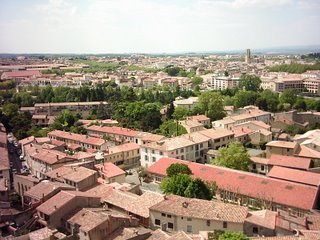
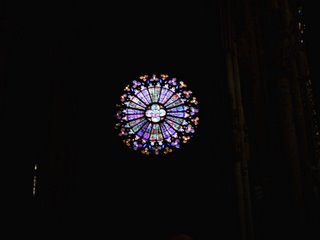
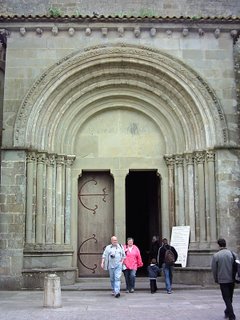
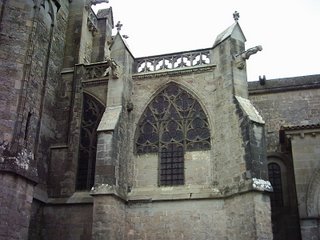
Last Saturday, some of us went along with fifty more people to visit the old city of Carcassonne, in the south of France. This place was one of the last fortresses the Cathares held and is full of history (and tourists!).
The following photos were taken in the Basilique St-Nazaire, which was built in honour of Simon de Montfort (ugh!).
The following photos were taken in the Basilique St-Nazaire, which was built in honour of Simon de Montfort (ugh!).
This is a view of the new city with the cathedral at the background. It was taken from the walls, from a very high place, and considering it was extremely windy, I can say it took some courage!
And now some pictures of the walls and the towers. You'll understand that my imagination went a bit wild and I expected to see a pink princess or a brave knight at the turn of every corner! Instead, there were sunglasses, ice-creams and people who had nothing to do but walk around gaping at the stones (like we did).
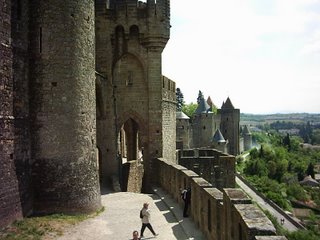
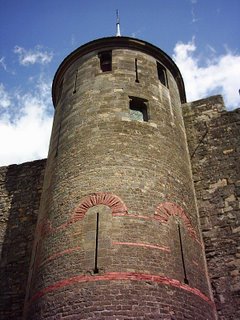
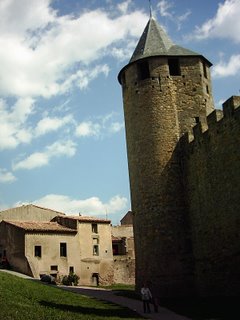
This part of the walls is at the right of the main entrance, the Porte Narbonnaise.
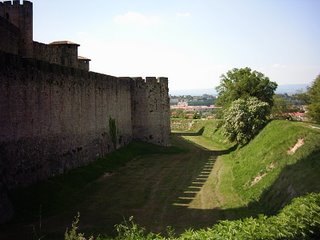
Carcassonne is a very pretty place, as well as very interesting from a historical point of view. We all want to go back, but the next time will definitely be in winter!
4 May 2006
My Mother Taught Me
My Mother taught me LOGIC
"If you fall off that swing and break your neck, you can't go to the store with me."
My Mother taught me MEDICINE
"If you don't stop crossing your eyes, they're going to freeze that way."
My Mother taught me TO THINK AHEAD
"If you don't pass your spelling test, you'll never get a good job!"
My Mother taught me ESP
"Put your sweater on; don't you think that I know when you're cold?"
My Mother taught me TO MEET A CHALLENGE
"What were you thinking? Answer me when I talk to you. Don't talk back to me!"
My Mother taught me HUMOR
"When that lawn mower cuts off your toes, don't come running to me."
My Mother taught me how to BECOME AN ADULT
"If you don't eat your vegetables, you'll never grow up.
My mother taught me ABOUT SEX
"How do you think you got here?"
My mother taught me about GENETICS
"You are just like your father!"
My mother taught me about my ROOTS
"Do you think you were born in a barn?"
My mother taught me about the WISDOM of AGE
"When you get to be my age, you will understand."
My mother taught me about ANTICIPATION
"Just wait until your father gets home."
My mother taught me about RECEIVING
"You are going to get it when we get home."
And my all time favorite thing- JUSTICE
"One day you will have kids, and I hope they turn out just like YOU..then you'll see what it's like."
My mother taught me TO APPRECIATE A JOB WELL DONE
"If you're going to kill each other, do it outside - I just finished cleaning!"
My mother taught me about TIME TRAVEL
"If you don't straighten up, I'm going to knock you into the middle of next week!"
My mother taught me LOGIC
"Because I said so, that's why."
My mother taught me FORESIGHT
"Make sure you wear clean underwear, in case you're in an accident.
My mother taught me IRONY
"Keep crying and I'll give you something to cry about."
My mother taught me about the science of OSMOSIS
"Shut your mouth and eat your supper!"
My mother taught me about CONTORTIONISM
"Will you just look at the dirt on the back of your neck!"
My mother taught me about STAMINA
"You'll sit there 'till all that spinach is finished."
My mother taught me about WEATHER
"It looks as if a tornado swept through your room."
My mother taught me about HYPOCRISY
"If I've told you once, I've told you a million times - Don't Exaggerate!!!"
My mother taught me THE CIRCLE OF LIFE
"I brought you into this world, and I can take you out."
My mother taught me about BEHAVIOR MODIFICATION
"Stop acting like your father!"
My mother taught me about ENVY
"There are millions of less fortunate children in this world who don't have wonderful parents like you do!"
"If you fall off that swing and break your neck, you can't go to the store with me."
My Mother taught me MEDICINE
"If you don't stop crossing your eyes, they're going to freeze that way."
My Mother taught me TO THINK AHEAD
"If you don't pass your spelling test, you'll never get a good job!"
My Mother taught me ESP
"Put your sweater on; don't you think that I know when you're cold?"
My Mother taught me TO MEET A CHALLENGE
"What were you thinking? Answer me when I talk to you. Don't talk back to me!"
My Mother taught me HUMOR
"When that lawn mower cuts off your toes, don't come running to me."
My Mother taught me how to BECOME AN ADULT
"If you don't eat your vegetables, you'll never grow up.
My mother taught me ABOUT SEX
"How do you think you got here?"
My mother taught me about GENETICS
"You are just like your father!"
My mother taught me about my ROOTS
"Do you think you were born in a barn?"
My mother taught me about the WISDOM of AGE
"When you get to be my age, you will understand."
My mother taught me about ANTICIPATION
"Just wait until your father gets home."
My mother taught me about RECEIVING
"You are going to get it when we get home."
And my all time favorite thing- JUSTICE
"One day you will have kids, and I hope they turn out just like YOU..then you'll see what it's like."
My mother taught me TO APPRECIATE A JOB WELL DONE
"If you're going to kill each other, do it outside - I just finished cleaning!"
My mother taught me about TIME TRAVEL
"If you don't straighten up, I'm going to knock you into the middle of next week!"
My mother taught me LOGIC
"Because I said so, that's why."
My mother taught me FORESIGHT
"Make sure you wear clean underwear, in case you're in an accident.
My mother taught me IRONY
"Keep crying and I'll give you something to cry about."
My mother taught me about the science of OSMOSIS
"Shut your mouth and eat your supper!"
My mother taught me about CONTORTIONISM
"Will you just look at the dirt on the back of your neck!"
My mother taught me about STAMINA
"You'll sit there 'till all that spinach is finished."
My mother taught me about WEATHER
"It looks as if a tornado swept through your room."
My mother taught me about HYPOCRISY
"If I've told you once, I've told you a million times - Don't Exaggerate!!!"
My mother taught me THE CIRCLE OF LIFE
"I brought you into this world, and I can take you out."
My mother taught me about BEHAVIOR MODIFICATION
"Stop acting like your father!"
My mother taught me about ENVY
"There are millions of less fortunate children in this world who don't have wonderful parents like you do!"
¡OPÁ! ¡¡YO VIACÉ UN CORRÁ!!
A link here for the amusement/shock of all. There is talk going around that this will be this summer's song. This is truly a great nation.
The May Queen
THE MAY QUEEN
YOU must wake and call me early, call me early, mother dear;
To-morrow ’ill be the happiest time of all the glad New-year;
Of all the glad New-year, mother, the maddest merriest day,
For I’m to be Queen o’ the May, mother, I’m to be Queen o’ the May.
There’s many a black, black eye, they say, but none so bright as mine;
There’s Margaret and Mary, there’s Kate and Caroline;
But none so fair as little Alice in all the land they say,
So I’m to be Queen o’ the May, mother, I’m to be Queen o’ the May.
I sleep so sound all night, mother, that I shall never wake,
If you do not call me loud when the day begins to break;
But I must gather knots of flowers, and buds and garlands gay,
For I’m to be Queen o’ the May, mother, I’m to be Queen o’ the May.
As I came up the valley whom think ye should I see
But Robin leaning on the bridge beneath the hazel-tree?
He thought of that sharp look, mother, I gave him yesterday,
But I’m to be Queen o’ the May, mother, I’m to be Queen o’ the May.
He thought I was a ghost, mother, for I was all in white,
And I ran by him without speaking, like a flash of light.
They call me cruel-hearted, but I care not what they say,
For I’m to be Queen o’ the May, mother, I’m to be Queen o’ the May.
They say he’s dying all for love, but that can never be;
They say his heart is breaking, mother—what is that to me?
There’s many a bolder lad ’ill woo me any summer day,
And I’m to be Queen o’ the May, mother, I’m to be Queen o’ the May.
Little Effie shall go with me to-morrow to the green,
And you’ll be there, too, mother, to see me made the Queen;
For the shepherd lads on every side ’ill come from far away,
And I’m to be Queen o’ the May, mother, I’m to be Queen o’ the May.
The honeysuckle round the porch has woven its wavy bowers,
And by the meadow-trenches blow the faint sweet cuckoo-flowers;
And the wild marsh-marigold shines like fire in swamps and hollows gray,
And I’m to be Queen o’ the May, mother, I’m to be Queen o’ the May.
The night-winds come and go, mother, upon the meadow-grass,
And the happy stars above them seem to brighten as they pass;
There will not be a drop of rain the whole of the livelong day,
And I’m to be Queen o’ the May, mother, I’m to be Queen o’ the May.
All the valley, mother, ’ill be fresh and green and still,
And the cowslip and the crowfoot are over all the hill,
And the rivulet in the flowery dale ’ill merrily glance and play,
For I’m to be Queen o’ the May, mother, I’m to be Queen o’ the May.
So you must wake and call me early, call me early, mother dear,
To-morrow ’ill be the happiest time of all the glad New-year;
To-morrow ’ill be of all the year the maddest merriest day,
For I’m to be Queen o’ the May, mother, I’m to be Queen o’ the May.
NEW-YEAR’S EVE
If you’re waking call me early, call me early, mother dear,
For I would see the sun rise upon the glad New-year.
It is the last New-year that I shall ever see,
Then you may lay me low i’ the mould and think no more of me.
To-night I saw the sun set; he set and left behind
The good old year, the dear old time, and all my peace of mind;
And the New-year’s coming up, mother, but I shall never see
The blossom on the blackthorn, the leaf upon the tree.
Last May we made a crown of flowers; we had a merry day;
Beneath the hawthorn on the green they made me Queen of May;
And we danced about the may-pole and in the hazel copse,
Till Charles’s Wain came out above the tall white chimney-tops.
There’s not a flower on all the hills; the frost is on the pane.
I only wish to live till the snowdrops come again;
I wish the snow would melt and the sun come out on high;
I long to see a flower so before the day I die.
The building rook’ll caw from the windy tall elm-tree,
And the tufted plover pipe along the fallow lea,
And the swallow ’ill come back again with summer o’er the wave,
But I shall lie alone, mother, within the mouldering grave.
Upon the chancel-casement, and upon that grave of mine,
In the early early morning the summer sun ’ill shine,
Before the red cock crows from the farm upon the hill,
When you are warm-asleep, mother, and all the world is still.
When the flowers come again, mother, beneath the waning light
You’ll never see me more in the long gray fields at night;
When from the dry dark wold the summer airs blow cool
On the oat-grass and the sword-grass, and the bulrush in the pool.
You’ll bury me, my mother, just beneath the hawthorn shade,
And you’ll come sometimes and see me where I am lowly laid.
I shall not forget you, mother, I shall hear you when you pass,
With your feet above my head in the long and pleasant grass.
I have been wild and wayward, but you’ll forgive me now;
You’ll kiss me, my own mother, and forgive me ere I go;
Nay, nay, you must not weep, nor let your grief be wild;
You should not fret for me, mother, you have another child.
If I can I’ll come again, mother, from out my resting-place;
Tho’ you’ll not see me, mother, I shall look upon your face;
Tho’ I cannot speak a work, I shall harken what you say,
And be often, often with you when you think I’m far away.
Good-night, good-night, when I have said good-night for evermore,
And you see me carried out from the threshold of the door,
Don’t let Effie come to see me till my grave be growing green.
She’ll be a better child to you than ever I have been.
She’ll find my garden-tools upon the granary floor.
Let her take ’em, they are hers; I shall never garden more;
But tell her, when I’m gone, to train the rosebush that I set
About the parlor-window and the box of mignonette.
Good-night, sweet mother; call me before the day is born.
All night I lie awake, but I fall asleep at morn;
But I would see the sun rise upon the glad New-year,
So, if you’re waking, call me, call me early, mother dear.
CONCLUSION
I thought to pass away before, and yet alive I am;
And in the fields all round I hear the bleating of the lamb.
How sadly, I remember, rose the morning of the year!
To die before the snowdrop came, and now the violet’s here.
O, sweet is the new violet, that comes beneath the skies,
And sweeter is the young lamb’s voice to me that cannot rise,
And sweet is all the land about, and all the flowers that blow,
And sweeter far is death than life to me that long to go.
It seem’d so hard at first, mother, to leave the blessed sun.
And now it seems as hard to stay, and yet His will be done!
But still I think it can’t be long before I find release;
And that good man, the clergyman, has told me words of peace.
O, blessings on his kindly voice and on his silver hair!
And blessings on his whole life long, until he meet me there!
O, blessings on his kindly heart and on his silver head!
A thousand times I blest him, as he knelt beside my bed.
He taught me all the mercy, for he show’d me all the sin.
Now, tho’ my lamp was lighted late, there’s One will let me in;
Nor would I now be well, mother, again, if that could be,
For my desire is but to pass to Him that died for me.
I did not hear the dog howl, mother, or the death-watch beat,
There came a sweeter token when the night and morning meet;
But sit beside my bed, mother, and put your hand in mine,
And Effie on the other side, and I will tell the sign.
All in the wild March-morning I heard the angels call;
It was when the moon was setting, and the dark was over all;
The trees began to whisper, and the wind began to roll,
And in the wild March-morning I heard them call my soul.
For lying broad awake I thought of you and Effie dear;
I saw you sitting in the house, and I no longer here;
With all my strength I pray’d for both, and so I felt resign’d,
And up the valley came a swell of music on the wind.
I thought that it was fancy, and I listen’d in my bed,
And then did something speak to me—I know not what was said;
For great delight and shuddering took hold of all my mind,
And up the valley came again the music on the wind.
But you were sleeping; and I said, ‘It’s not for them, it’s mine.’
And if it come three times, I thought, I take it for a sign.
And once again it came, and close beside the window-bars,
Then seem’d to go right up to heaven and die among the stars.
So now I think my time is near. I trust it is. I know
The blessed music went that way my soul will have to go.
And for myself, indeed, I care not if I go to-day;
But, Effie, you must comfort her when I am past away.
And say to Robin a kind word, and tell him not to fret;
There’s many a worthier than I, would make him happy yet.
If I had lived—I cannot tell—I might have been his wife;
But all these things have ceased to be, with my desire of life.
O, look! the sun begins to rise, the heavens are in a glow;
He shines upon a hundred fields, and all of them I know.
And there I move no longer now, and there his light may shine—
Wild flowers in the valley for other hands than mine.
O, sweet and strange it seems to me, that ere this day is done
The voice, that now is speaking, may be beyond the sun—
For ever and for ever with those just souls and true—
And what is life, that we should moan? why make we such ado?
For ever and for ever, all in a blessed home—
And there to wait a little while till you and Effie come—
To lie within the light of God, as I lie upon your breast—
And the wicked cease from troubling, and the weary are at rest.
Alfred Lord Tennyson
YOU must wake and call me early, call me early, mother dear;
To-morrow ’ill be the happiest time of all the glad New-year;
Of all the glad New-year, mother, the maddest merriest day,
For I’m to be Queen o’ the May, mother, I’m to be Queen o’ the May.
There’s many a black, black eye, they say, but none so bright as mine;
There’s Margaret and Mary, there’s Kate and Caroline;
But none so fair as little Alice in all the land they say,
So I’m to be Queen o’ the May, mother, I’m to be Queen o’ the May.
I sleep so sound all night, mother, that I shall never wake,
If you do not call me loud when the day begins to break;
But I must gather knots of flowers, and buds and garlands gay,
For I’m to be Queen o’ the May, mother, I’m to be Queen o’ the May.
As I came up the valley whom think ye should I see
But Robin leaning on the bridge beneath the hazel-tree?
He thought of that sharp look, mother, I gave him yesterday,
But I’m to be Queen o’ the May, mother, I’m to be Queen o’ the May.
He thought I was a ghost, mother, for I was all in white,
And I ran by him without speaking, like a flash of light.
They call me cruel-hearted, but I care not what they say,
For I’m to be Queen o’ the May, mother, I’m to be Queen o’ the May.
They say he’s dying all for love, but that can never be;
They say his heart is breaking, mother—what is that to me?
There’s many a bolder lad ’ill woo me any summer day,
And I’m to be Queen o’ the May, mother, I’m to be Queen o’ the May.
Little Effie shall go with me to-morrow to the green,
And you’ll be there, too, mother, to see me made the Queen;
For the shepherd lads on every side ’ill come from far away,
And I’m to be Queen o’ the May, mother, I’m to be Queen o’ the May.
The honeysuckle round the porch has woven its wavy bowers,
And by the meadow-trenches blow the faint sweet cuckoo-flowers;
And the wild marsh-marigold shines like fire in swamps and hollows gray,
And I’m to be Queen o’ the May, mother, I’m to be Queen o’ the May.
The night-winds come and go, mother, upon the meadow-grass,
And the happy stars above them seem to brighten as they pass;
There will not be a drop of rain the whole of the livelong day,
And I’m to be Queen o’ the May, mother, I’m to be Queen o’ the May.
All the valley, mother, ’ill be fresh and green and still,
And the cowslip and the crowfoot are over all the hill,
And the rivulet in the flowery dale ’ill merrily glance and play,
For I’m to be Queen o’ the May, mother, I’m to be Queen o’ the May.
So you must wake and call me early, call me early, mother dear,
To-morrow ’ill be the happiest time of all the glad New-year;
To-morrow ’ill be of all the year the maddest merriest day,
For I’m to be Queen o’ the May, mother, I’m to be Queen o’ the May.
NEW-YEAR’S EVE
If you’re waking call me early, call me early, mother dear,
For I would see the sun rise upon the glad New-year.
It is the last New-year that I shall ever see,
Then you may lay me low i’ the mould and think no more of me.
To-night I saw the sun set; he set and left behind
The good old year, the dear old time, and all my peace of mind;
And the New-year’s coming up, mother, but I shall never see
The blossom on the blackthorn, the leaf upon the tree.
Last May we made a crown of flowers; we had a merry day;
Beneath the hawthorn on the green they made me Queen of May;
And we danced about the may-pole and in the hazel copse,
Till Charles’s Wain came out above the tall white chimney-tops.
There’s not a flower on all the hills; the frost is on the pane.
I only wish to live till the snowdrops come again;
I wish the snow would melt and the sun come out on high;
I long to see a flower so before the day I die.
The building rook’ll caw from the windy tall elm-tree,
And the tufted plover pipe along the fallow lea,
And the swallow ’ill come back again with summer o’er the wave,
But I shall lie alone, mother, within the mouldering grave.
Upon the chancel-casement, and upon that grave of mine,
In the early early morning the summer sun ’ill shine,
Before the red cock crows from the farm upon the hill,
When you are warm-asleep, mother, and all the world is still.
When the flowers come again, mother, beneath the waning light
You’ll never see me more in the long gray fields at night;
When from the dry dark wold the summer airs blow cool
On the oat-grass and the sword-grass, and the bulrush in the pool.
You’ll bury me, my mother, just beneath the hawthorn shade,
And you’ll come sometimes and see me where I am lowly laid.
I shall not forget you, mother, I shall hear you when you pass,
With your feet above my head in the long and pleasant grass.
I have been wild and wayward, but you’ll forgive me now;
You’ll kiss me, my own mother, and forgive me ere I go;
Nay, nay, you must not weep, nor let your grief be wild;
You should not fret for me, mother, you have another child.
If I can I’ll come again, mother, from out my resting-place;
Tho’ you’ll not see me, mother, I shall look upon your face;
Tho’ I cannot speak a work, I shall harken what you say,
And be often, often with you when you think I’m far away.
Good-night, good-night, when I have said good-night for evermore,
And you see me carried out from the threshold of the door,
Don’t let Effie come to see me till my grave be growing green.
She’ll be a better child to you than ever I have been.
She’ll find my garden-tools upon the granary floor.
Let her take ’em, they are hers; I shall never garden more;
But tell her, when I’m gone, to train the rosebush that I set
About the parlor-window and the box of mignonette.
Good-night, sweet mother; call me before the day is born.
All night I lie awake, but I fall asleep at morn;
But I would see the sun rise upon the glad New-year,
So, if you’re waking, call me, call me early, mother dear.
CONCLUSION
I thought to pass away before, and yet alive I am;
And in the fields all round I hear the bleating of the lamb.
How sadly, I remember, rose the morning of the year!
To die before the snowdrop came, and now the violet’s here.
O, sweet is the new violet, that comes beneath the skies,
And sweeter is the young lamb’s voice to me that cannot rise,
And sweet is all the land about, and all the flowers that blow,
And sweeter far is death than life to me that long to go.
It seem’d so hard at first, mother, to leave the blessed sun.
And now it seems as hard to stay, and yet His will be done!
But still I think it can’t be long before I find release;
And that good man, the clergyman, has told me words of peace.
O, blessings on his kindly voice and on his silver hair!
And blessings on his whole life long, until he meet me there!
O, blessings on his kindly heart and on his silver head!
A thousand times I blest him, as he knelt beside my bed.
He taught me all the mercy, for he show’d me all the sin.
Now, tho’ my lamp was lighted late, there’s One will let me in;
Nor would I now be well, mother, again, if that could be,
For my desire is but to pass to Him that died for me.
I did not hear the dog howl, mother, or the death-watch beat,
There came a sweeter token when the night and morning meet;
But sit beside my bed, mother, and put your hand in mine,
And Effie on the other side, and I will tell the sign.
All in the wild March-morning I heard the angels call;
It was when the moon was setting, and the dark was over all;
The trees began to whisper, and the wind began to roll,
And in the wild March-morning I heard them call my soul.
For lying broad awake I thought of you and Effie dear;
I saw you sitting in the house, and I no longer here;
With all my strength I pray’d for both, and so I felt resign’d,
And up the valley came a swell of music on the wind.
I thought that it was fancy, and I listen’d in my bed,
And then did something speak to me—I know not what was said;
For great delight and shuddering took hold of all my mind,
And up the valley came again the music on the wind.
But you were sleeping; and I said, ‘It’s not for them, it’s mine.’
And if it come three times, I thought, I take it for a sign.
And once again it came, and close beside the window-bars,
Then seem’d to go right up to heaven and die among the stars.
So now I think my time is near. I trust it is. I know
The blessed music went that way my soul will have to go.
And for myself, indeed, I care not if I go to-day;
But, Effie, you must comfort her when I am past away.
And say to Robin a kind word, and tell him not to fret;
There’s many a worthier than I, would make him happy yet.
If I had lived—I cannot tell—I might have been his wife;
But all these things have ceased to be, with my desire of life.
O, look! the sun begins to rise, the heavens are in a glow;
He shines upon a hundred fields, and all of them I know.
And there I move no longer now, and there his light may shine—
Wild flowers in the valley for other hands than mine.
O, sweet and strange it seems to me, that ere this day is done
The voice, that now is speaking, may be beyond the sun—
For ever and for ever with those just souls and true—
And what is life, that we should moan? why make we such ado?
For ever and for ever, all in a blessed home—
And there to wait a little while till you and Effie come—
To lie within the light of God, as I lie upon your breast—
And the wicked cease from troubling, and the weary are at rest.
Alfred Lord Tennyson
Welcome!
Hello, and welcome to my blog!
In here you will find poetry, nice/strange stories, stuff I write, even a joke or two.
I'm going to keep adding stuff in a terribly untidy way. I hope to make this place interesting, comfortable and cosy... If anyone wants to post opinions and talk about any subject, you are more than welcome to leave a comment or drop me a note.
This blog is bilingual, like me; if anybody has a special interest in something they don't understand, feel free to ask for translations.
Thanks for being here and have a nice time!
-----------------
Hola, i benvinguts al meu blog!
Aquí trobareu poesia, històries maques/estranyes, coses que escric jo i potser fins i tot algun acudit.
Aniré afegint coses de manera molt desendreçada. Espero fer d'aquest lloc un racó interessant, còmode i acollidor... Si algú vol penjar opinions o parlar de qualsevol tema, qualsevol comentari o noteta seran més que benvinguts.
Aquest blog és bilingüe, com jo; si algú té un interès especial per alguna cosa que no entén, demaneu-me'n una traducció, cap problema.
Merci per ser aquí i passeu-ho bé!
In here you will find poetry, nice/strange stories, stuff I write, even a joke or two.
I'm going to keep adding stuff in a terribly untidy way. I hope to make this place interesting, comfortable and cosy... If anyone wants to post opinions and talk about any subject, you are more than welcome to leave a comment or drop me a note.
This blog is bilingual, like me; if anybody has a special interest in something they don't understand, feel free to ask for translations.
Thanks for being here and have a nice time!
-----------------
Hola, i benvinguts al meu blog!
Aquí trobareu poesia, històries maques/estranyes, coses que escric jo i potser fins i tot algun acudit.
Aniré afegint coses de manera molt desendreçada. Espero fer d'aquest lloc un racó interessant, còmode i acollidor... Si algú vol penjar opinions o parlar de qualsevol tema, qualsevol comentari o noteta seran més que benvinguts.
Aquest blog és bilingüe, com jo; si algú té un interès especial per alguna cosa que no entén, demaneu-me'n una traducció, cap problema.
Merci per ser aquí i passeu-ho bé!
Subscribe to:
Posts (Atom)